
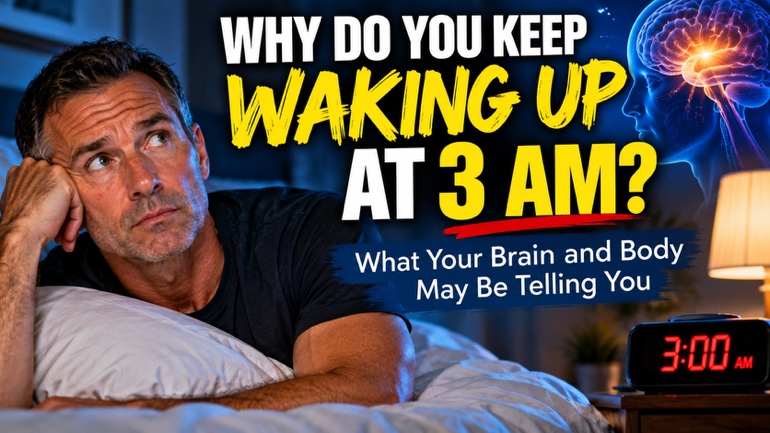
What Your Brain and Body May Be Telling You
Have you ever found yourself waking up at 3 AM, looking at the clock, and wondering, “Why am I awake again?”
You're not alone. Many adults, especially those over 50, experience this frustrating pattern. You may fall asleep easily, only to find yourself wide awake in the middle of the night, sometimes struggling to get back to sleep.
But here's something interesting: Your brain isn't necessarily waking you up because something is wrong. It may be responding to changes happening inside your body.
Your Brain Never Really Turns Off
Even while you're sleeping, your brain is hard at work regulating hormones, repairing tissues, processing information, and preparing your body for the next day.
One hormone involved in this process is cortisol, often called the stress hormone.
Cortisol naturally begins rising during the later part of the night, helping prepare your body to wake up in the morning. However, stress and disruptions in sleep regulation can make it easier to wake up earlier than you'd like.
This doesn't necessarily mean your cortisol is too high. It simply means your body's internal systems may be influencing your sleep.
Why Does This Happen More Often as We Age?
As we get older, our sleep patterns naturally change.
We may spend less time in deep sleep, wake more frequently during the night, and experience shifts in our internal biological clock.
Other factors can contribute, including:
- Stress and anxiety: An overactive mind can make it difficult to stay asleep.
- Blood sugar changes: Certain glucose fluctuations, particularly in people taking glucose-lowering medications, may disturb sleep.
- Medications: Some medications can interfere with normal sleep patterns.
- Sleep apnea: Interrupted breathing can repeatedly wake the brain, sometimes without us realizing it.
- Changes in daily activity: Less movement and reduced exposure to daylight can weaken the body's natural sleep-wake rhythm.
The important thing to understand is that poor sleep isn't something we should automatically accept simply because we're getting older.
Your Nervous System Plays an Important Role
Think of your nervous system as having an accelerator and a brake.
Your sympathetic nervous system helps keep you alert and ready for action. Your parasympathetic nervous system supports relaxation, recovery, and rest.
Both systems are essential.
However, when stress, inconsistent sleep habits, or other disturbances interfere with normal regulation, your body may have difficulty settling back into sleep after waking.
And sometimes, the more you worry about being awake, the harder it becomes to fall asleep again.
Can Exercise Help You Sleep Better?
Absolutely!
Regular physical activity is one of the most effective lifestyle habits for supporting better sleep.
Walking, resistance training, swimming, and other forms of exercise can help improve sleep quality, support metabolic health, reduce stress, and reinforce your natural sleep-wake cycle.
And here's something I always emphasize:
Exercise isn't just about building stronger muscles. It's about improving how your entire body functions.
Movement challenges your muscles, cardiovascular system, metabolism, and nervous system. These adaptations can contribute to better recovery and more restorative sleep.
You don't have to exhaust yourself to experience the benefits. Consistency is far more important than intensity.
Five Simple Ways to Improve Your Sleep
- Move every day. Walking, strength training, and other enjoyable activities can support healthier sleep.
- Get natural daylight. Morning sunlight helps regulate your internal biological clock.
- Maintain a consistent sleep schedule. Try to go to bed and wake up around the same time each day.
- Create a relaxing evening routine. Reduce stimulating activities, bright lights, and unnecessary stress before bedtime.
- Don't fight the clock. If you wake up, avoid repeatedly checking the time. If you remain awake for a while, get out of bed and do something quiet in dim lighting until you feel sleepy again.
If nighttime awakenings become persistent, cause daytime fatigue, or occur with loud snoring or gasping, speak with your healthcare provider. Sometimes an underlying sleep disorder needs attention.
Final Thoughts: Your Body Is Always Communicating
Waking up at 3 AM doesn't necessarily mean something is wrong. But recurring sleep disruptions can be a reason to pay closer attention to your daily habits, recovery, and overall health.
Getting older is inevitable. Feeling tired, sluggish, and poorly rested doesn't have to be.
Our bodies are remarkably adaptable, and positive changes can happen at any age.
Remember, staying healthy isn't simply about adding years to your life. It's about adding energy, strength, movement, and quality to those years.
Move better. Sleep better. Live better.
Jason Kelly