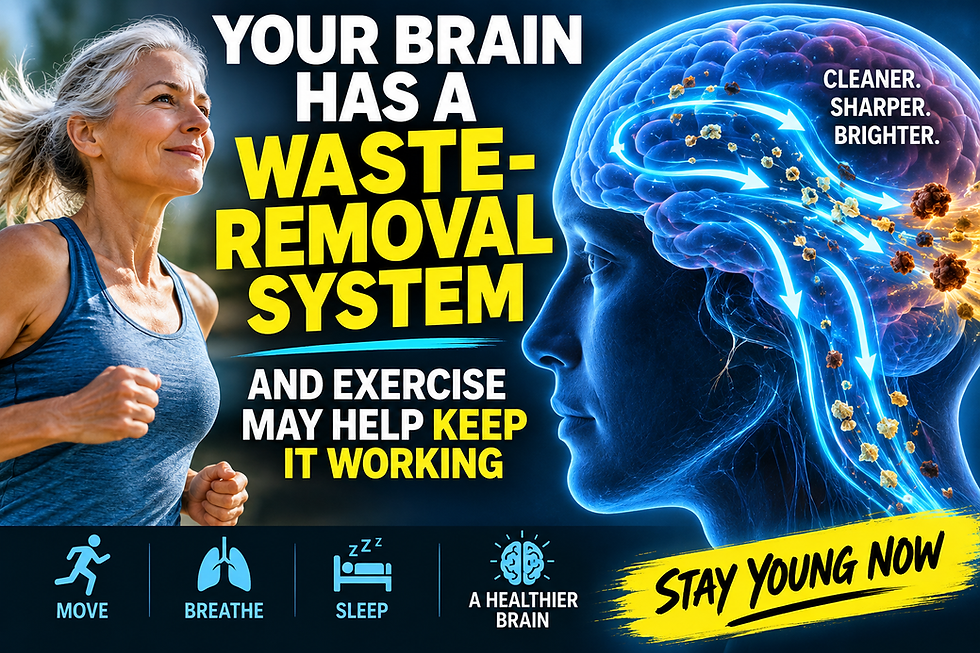
Breathe Better, Move Better: Why Functional Breathing Matters

Breathing is something we do all day, every day, without thinking about it. But just because we breathe automatically doesn't necessarily mean we're breathing efficiently. How we breathe can influence how we move, how we stabilize our body, how we manage stress, how we recover from exercise, and even how we feel throughout the day.
That's where functional breathing comes in.
What Is Functional Breathing?
Functional breathing is simply breathing in a way that works with the natural mechanics of your body. Your diaphragm is the primary muscle of breathing. When you inhale, the diaphragm contracts and moves downward while your lower rib cage expands. When you exhale, the diaphragm relaxes, and the ribs move back inward.
Think of the rib cage expanding 360 degrees—into the front, sides, and back—rather than simply lifting the chest and shoulders.
When breathing becomes dominated by the upper chest, muscles around the neck and shoulders may begin doing more work than necessary.
Over time, this can influence posture, tension, movement, and how efficiently we exercise.
Breathing and Your Core Are Connected
Most people think of the core as the abdominal muscles. It's much more than that. The diaphragm, abdominal muscles, spinal stabilizers, and pelvic floor work together to help regulate pressure inside the trunk. That pressure helps create stability.
Think about picking up a heavy grocery bag, getting out of a chair, climbing stairs, swinging a pickleball paddle, or performing a squat. Before and during movement, your body needs enough stability to efficiently transfer force efficiently.
That's why I like to think of movement in three steps:
BREATHE → STABILIZE → MOVE
Good movement doesn't begin with your arms or legs. It begins at the center of the body.
Try This Simple Breathing Check
Place one hand on your upper chest and the other around your lower ribs or abdomen.
Take a slow, comfortable breath through your nose. What moves?
If your shoulders immediately rise and most of the movement occurs in your upper chest, you may be relying heavily on accessory breathing muscles. Instead, try breathing gently into the lower rib cage.
Imagine your ribs expanding outward in all directions as you inhale.
Then slowly exhale and feel the ribs come back down and inward. Don't force a giant breath.
The goal is controlled, relaxed expansion, not simply getting as much air as possible.
Why Breathing Matters During Exercise
Breathing shouldn't disappear once your workout begins.
During strength exercises, your breathing and abdominal muscles help create trunk stability.
During cardiovascular exercise, efficient breathing helps you meet the increasing demand for oxygen and remove carbon dioxide.
Between difficult exercises, controlling your breathing can also help you recover and prepare for the next effort. And during balance, mobility, and functional training, breathing can help you maintain control instead of unnecessarily tensing your entire body.
In other words, breathing isn't separate from exercise.
Breathing is part of movement.
Breathing Can Also Affect Stress and Recovery
Have you ever noticed what happens to your breathing when you're stressed?
It often becomes faster and shallower.
Slowing your breathing—particularly using a comfortable, longer exhale—can encourage the body to shift toward a calmer state.
Try this after exercise or during a stressful moment:
Inhale gently through your nose for about 3–4 seconds.
Then exhale slowly for about 5–6 seconds.
Repeat for several comfortable breaths.
You don't need to force it. If you feel light-headed or uncomfortable, return to normal breathing.
Sometimes something as simple as slowing down your breathing can change how your entire body feels.
Why Functional Breathing Becomes Important as We Age
As we get older, maintaining strength is important—but so are mobility, balance, coordination, posture, and the ability to move efficiently.
The rib cage and thoracic spine are part of that system. If the upper body becomes increasingly stiff and breathing becomes shallow, we may lose some of the natural movement that should occur through the trunk.
That's one reason breathing exercises can be valuable alongside strength, mobility, balance, and cardiovascular training. The goal isn't to perform complicated breathing techniques.
The goal is to maintain a body that can breathe, stabilize, and move well.
Start With the Breath
Fitness doesn't always begin with lifting heavier weights, running faster, or doing more repetitions.
Sometimes it begins with something much more fundamental.
Your breath.
Learn to control your breathing.
Use that breath to create stability.
Then add movement.
Breathe. Stabilize. Move.
Because when you breathe better, you give your body a better foundation to move better.
Don't forget to learn more about how to be young; check out my book "Stay Young Now" on Amazon.com
Jason Kelly